
Microbify and the University of Regensburg, Five Years After the Spin-Off
For its first two years, Microbify ran its experiments in lab space at the University of Regensburg (UR). The company was founded in 2021 as a spin-off of the Department of Microbiology and the German Archaea Centre, and the university gave it room to develop its methods before it could stand on its own. Five years later, Microbify has its own labs in Straubing and a growing list of industrial clients. It also has a new joint research project with the department it came from.
Roots in Regensburg
Every spin-off starts with knowledge built inside a university. In Microbify's case, that knowledge was anaerobic and extremophile microbiology, developed at the Department of Microbiology and the German Archaea Centre under Prof. Dr. Dina Grohmann.
The early years depended on that environment. With support from the university leadership and Prof. Grohmann, the founding team developed and established its procedures and technologies in UR's facilities. In 2023 Microbify moved into its own laboratories at the Technology and Start-up Center at Biocampus Straubing, part of Hafen Straubing-Sand.
Dr. Georg Schmid, managing director and co-founder of Microbify, calls the move the company's most important milestone so far. Leaving the "nest" and building independent infrastructure for anaerobic microbiology was a major challenge. It gave the company the independence it needed to grow. It did not cut the tie to Regensburg. The close connection to UR remains part of Microbify's company culture, and regular scientific exchange and joint projects continue to create value on both sides.

A joint project on deep-sea archaea
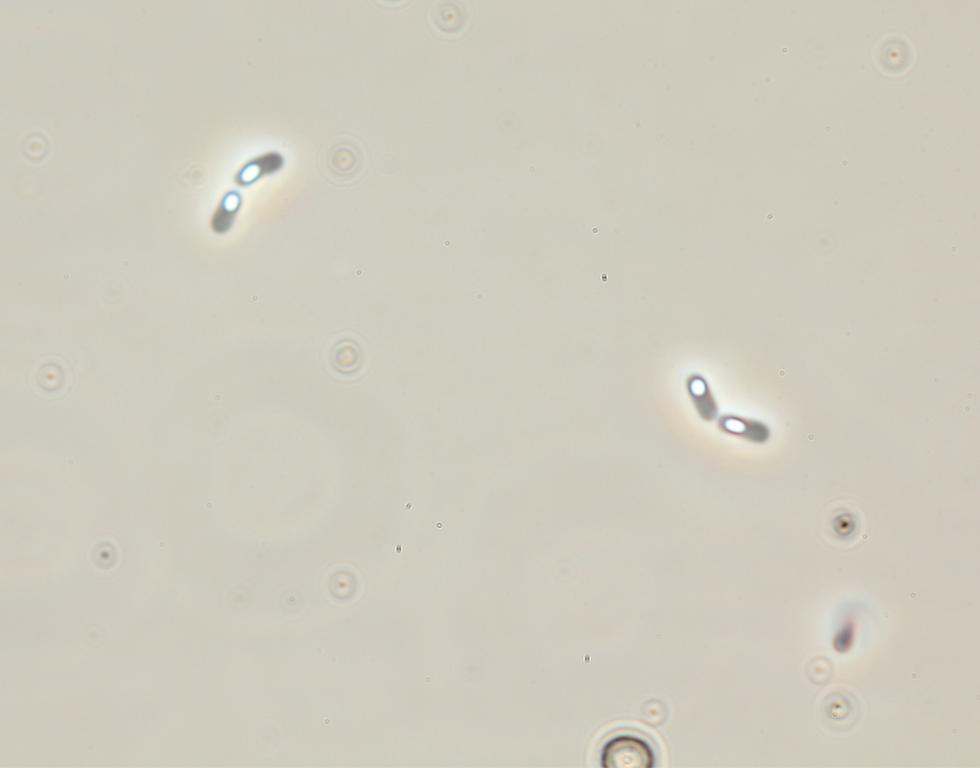
The latest of those joint projects brought Microbify back to the strain collection it knows well. Together with Dr. Robert Reichelt and Prof. Dr. Dina Grohmann, the team studied Thermococcales, an order of archaea from deep-sea hydrothermal vents. These organisms live at temperatures often above 80 °C and ferment proteins and sugars, producing hydrogen along the way. Their enzymes stay active and stable under conditions that would destroy most proteins.
The project focused on formate, the salt of formic acid. Some Thermococcales strains carry formate dehydrogenases, enzymes that convert carbon dioxide and hydrogen into formate and back again. Formate is being studied as a carrier for hydrogen because it can store a lot of it, is environmentally compatible, and fits existing infrastructure. If enzymes like these work at industrial scale, they could help store renewable hydrogen and turn carbon dioxide into a raw material for chemicals, bioplastics, or biofuels.
Shared work between lab and company
The project shows what each side brings to the table.
The university contributed:
the archaea strain collection of the German Archaea Centre, systematically sequenced in recent years to open it up for biotechnology
reactivation, cultivation, and first-time genomic characterization of more than 100 Thermococcales isolates
growth experiments on hydrogen tolerance and formate production, and genome analysis that identified promising gene clusters
heterologous production of the enzymes in Escherichia coli, with purification at the department
On Microbify's side, the work covered:
enzyme activity measurements, including formate measurements by HPLC in its own lab
expertise in developing biotechnological applications
ongoing assessment of the enzymes' potential for later technical use
Johanna Opheys connected both sides in a very practical way. As a master's student working in cooperation between UR and Microbify, she produced and purified the enzymes at the department and measured formate in Microbify's lab in Straubing.
The work itself demanded skills both partners share. The enzymes' active centers are complex and extremely sensitive to oxygen, so every step had to run under strictly anaerobic conditions, and at high temperatures on top of that. Handling oxygen-sensitive organisms is everyday work at Microbify, from anaerobic cultivation to high-pressure sampling for gas storage operators.

Why academia and industry need each other
Universities hold resources that no young company could build on its own. Regensburg's collections are a good example. Besides the archaea collection, the Bakterienbank Regensburg (BBR) holds more than 2,600 isolates gathered over more than 40 years of research, preserved in liquid nitrogen at −196 °C. The Biotechnikum of the department and the German Archaea Centre runs a fermentation facility that can cultivate extremophiles like Thermococcales at large scale, at up to 120 °C, five bar of overpressure, and pH values between 1 and 12.
Companies bring a different lens. Microbify works with operators of underground gas and hydrogen storage, supports energy providers on microbiological risks, and has built expertise in microbiologically influenced corrosion. That daily contact with industrial problems helps judge early which research results could become usable processes. In this project, it meant linking basic questions about archaeal enzymes directly to hydrogen use, CO₂ utilization, and sustainable bioprocesses.
Neither side replaces the other. Basic research produces the strains, data, and understanding. Industry partners test where that knowledge fits real applications and feed practical questions back into the lab. A spin-off sits in a useful position in that exchange, because it speaks both languages and already knows the people on the other side.

Keeping the exchange going
For Microbify, the collaboration with UR is not a closed chapter from the founding years. It is an ongoing relationship the company is glad to keep investing in, through joint projects, student theses carried out in cooperation, and regular scientific exchange with the department.
The Thermococcales project is a good place to continue. The screening phase narrowed a large pool of strains down to the strongest candidates. Next, the work focuses on the two or three most promising enzyme complexes. Challenges remain at every level, from the enzymes' oxygen sensitivity to integrating them into industrial processes and scaling suitable bioprocesses. Solving them will take exactly the mix of academic depth and applied experience this partnership already combines.
Conclusion
Microbify grew out of the University of Regensburg, and five years on, the two still do science together. The Thermococcales project shows how a spin-off can give back to its university as a research partner, and Microbify is happy to keep feeding that collaboration.


Comments